Introduction
Monitoring blood pressure at home can be a useful part of understanding cardiovascular health, particularly for people who have been advised by a healthcare professional to check their readings regularly. Instead of relying exclusively on occasional measurements at a clinic or pharmacy, home monitoring can provide a series of readings collected under familiar conditions.
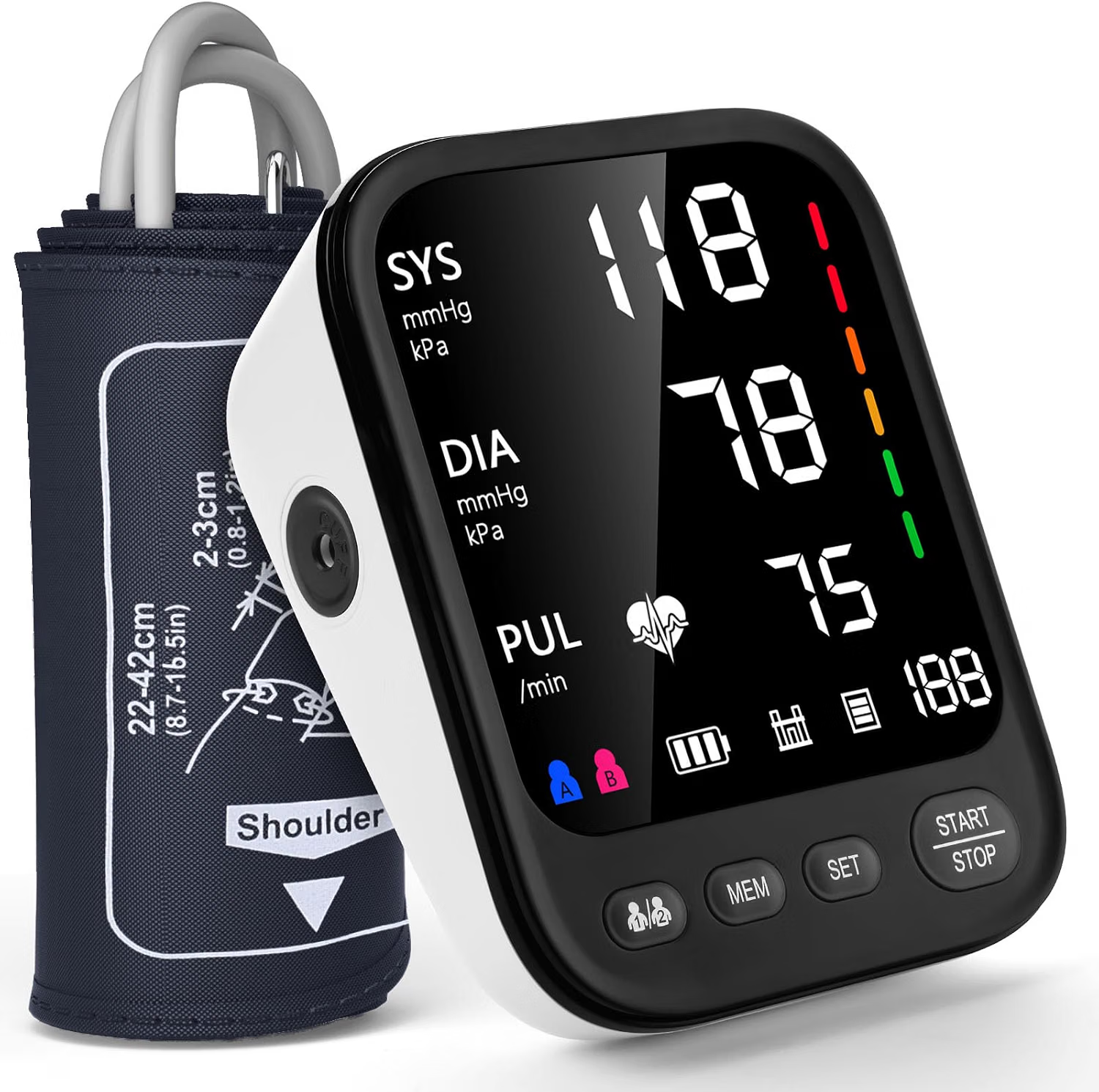
The Automatic Upper Arm Blood Pressure Monitor described here is designed around that purpose. It features an automatic upper-arm cuff, a large 4.5-inch backlit display, memory for up to 2 users with up to 199 readings per user according to the product description, an adjustable cuff designed for upper-arm circumferences from 9 to 17 inches, and an indicator intended to identify possible irregular heart rhythms.
These features address several practical challenges associated with home blood pressure monitoring. A large display can make readings easier to see, memory can reduce the need to write down every measurement immediately, and an appropriately sized upper-arm cuff can make the measurement process more consistent.
However, a blood pressure monitor should not be viewed as a diagnostic device simply because it displays numbers or includes an arrhythmia indicator. Home measurements are one part of a broader healthcare process. The American Heart Association recommends automatic upper-arm cuff-style monitors for home use and emphasizes the importance of using a properly sized cuff and a validated device.
This distinction is especially important because blood pressure changes naturally throughout the day. Physical activity, caffeine, stress, smoking, posture, talking, and even the way an arm is positioned can affect a reading.
The purpose of this guide is therefore not to interpret individual readings or make medical claims about the monitor. Instead, it explains the product’s design, how an automatic upper-arm monitor can fit into a home monitoring routine, how to use such a device more consistently, what the various features mean, and what to consider when comparing different categories of blood pressure monitors.
What Is an Automatic Upper Arm Blood Pressure Monitor?
An automatic upper-arm blood pressure monitor is an electronic device that uses an inflatable cuff placed around the upper arm to estimate blood pressure.
During a measurement, the cuff inflates and then gradually releases pressure. Internal sensors detect changes associated with blood flow and the device calculates a blood pressure reading.
The result is generally presented as two primary numbers:
- Systolic pressure, the upper number
- Diastolic pressure, the lower number
The measurement is normally expressed in millimeters of mercury, abbreviated as mm Hg.
An automatic monitor performs the inflation and measurement process electronically, so the user does not need to manually inflate a cuff or listen through a stethoscope.
The upper-arm design is important. The American Heart Association recommends automatic, cuff-style upper-arm monitors for home blood pressure monitoring and does not recommend wrist and finger monitors as the preferred option because readings can be less reliable.
The monitor described here is therefore part of a category that is intended to make routine measurements relatively straightforward while providing a larger visual interface and stored readings.
Key Features
Automatic Upper-Arm Measurement
The main feature is automatic blood pressure measurement using an upper-arm cuff.
After the cuff is positioned correctly and the measurement is started, the device handles the inflation and measurement process electronically.
This can be convenient for people who want to establish a repeatable home-monitoring routine without manually operating a traditional blood pressure apparatus.
Correct positioning remains essential. Automatic operation does not eliminate the need for proper technique.
The American Heart Association recommends sitting quietly for at least five minutes, keeping the back supported and feet flat on the floor, resting the arm at heart level, placing the cuff on bare skin, and avoiding talking during the measurement.
4.5-Inch Backlit Display
The monitor includes a large 4.5-inch backlit screen.
A larger display can be useful when reading the results immediately after a measurement, particularly for people who have difficulty reading smaller digital screens.
Backlighting can also make the information easier to see in lower-light environments.
This is a practical feature rather than a medical one. A larger display does not make a measurement more accurate by itself. The accuracy of a blood pressure reading depends on factors including the device, cuff fit, preparation, positioning, and measurement technique.
Adjustable 9-to-17-Inch Cuff
The product description specifies a cuff designed for upper-arm circumferences from 9 to 17 inches.
Cuff size is one of the most important considerations when selecting a home blood pressure monitor.
A cuff should fit the user’s upper arm according to the manufacturer’s specified range. A cuff that is too small or too large can contribute to inaccurate readings. The American Heart Association specifically recommends measuring the upper arm and choosing a monitor with the appropriate cuff size.
This is why users should measure their arm rather than simply assuming that a cuff labeled “large” or “universal” will fit correctly.
The 9-to-17-inch range covers many adult arm sizes, but users should still measure their own arm circumference before relying on the included cuff.
Memory for Two Users
The product is described as offering 2×199 readout memory, meaning the system is designed to store up to 199 readings for each of two users according to the listing.
This can be useful in households where two people regularly monitor their blood pressure.
Instead of maintaining separate paper records for every measurement, stored readings can provide a convenient historical reference.
Memory can also make it easier to discuss a series of readings with a healthcare professional.
However, stored data should be treated as a record rather than a diagnosis. A collection of numbers is most useful when interpreted in the context of the person’s health history and guidance from a healthcare professional.
Arrhythmia Detection Indicator
The product description identifies an arrhythmia detection function.
An irregular-heartbeat indicator is intended to identify certain irregular pulse patterns detected during a measurement.
This feature should not be interpreted as a diagnosis of an arrhythmia.
Blood pressure monitors use algorithms to analyze pulse signals during the measurement process. If the device indicates an irregular rhythm, that does not automatically mean that a specific heart condition has been confirmed.
Repeated or concerning irregular-heartbeat indications should be discussed with an appropriate healthcare professional.
Similarly, a monitor not displaying an irregular-rhythm indication does not rule out a heart rhythm condition.
Home Hypertension Monitoring
The product is designed for home blood pressure measurement, which can be useful for tracking readings over time.
Home monitoring has an important role in hypertension management. The American Heart Association recommends home monitoring for people with high blood pressure and notes that it can also help healthcare professionals assess whether treatment is working.
The important distinction is that home monitoring supports medical care; it does not replace medical evaluation.
A user should not change medication, stop treatment, or make a diagnosis based solely on the numbers shown by a home monitor.
Understanding the Numbers on the Screen
A blood pressure reading contains two main values.
The systolic number represents pressure in the arteries when the heart contracts.
The diastolic number represents pressure when the heart relaxes between beats.
For example, a reading might appear as a pair such as 120/80 mm Hg.
It is important not to interpret a single measurement in isolation.
Blood pressure naturally fluctuates. A person’s reading can change depending on activity, stress, caffeine, smoking, posture, recent meals, and other factors.
That is why repeated measurements collected under consistent conditions can provide more useful information than one isolated number.
The appropriate interpretation of those readings should come from recognized medical guidance and, when necessary, a healthcare professional.
How It Can Be Used
Establishing a Home Monitoring Routine
One of the most useful applications is creating a consistent measurement routine.
A healthcare professional may recommend checking blood pressure at particular times or with a particular frequency.
Following that schedule can help create a more useful record than taking measurements randomly.
The CDC recommends discussing home monitoring with a healthcare team and notes that people monitoring their blood pressure should generally take at least two readings, one or two minutes apart, when measuring.
The American Heart Association similarly recommends taking two readings about one minute apart and recording the results.
Morning Measurements
Some people are instructed to monitor blood pressure in the morning.
If morning monitoring is part of a healthcare professional’s plan, using the same routine each day can help make measurements more comparable.
The key is consistency rather than simply choosing a particular time independently.
Evening Measurements
Evening measurements may also form part of a monitoring plan.
Again, the appropriate schedule depends on the individual’s circumstances and healthcare guidance.
The goal is to create a series of measurements that can be evaluated over time rather than becoming overly focused on one result.
Tracking Changes Over Time
The memory function can help create a longer-term record.
For example, a user may be able to review whether readings have generally been similar, fluctuated, or changed over a period of time.
This information can be useful when discussing blood pressure management with a healthcare professional.
It is often more informative to look at patterns than to focus on one unusually high or low result.
Sharing Information During Appointments
A home monitor can also be brought to a medical appointment.
The American Heart Association recommends taking a home monitor to an appointment so a healthcare professional can check whether the device is being used correctly and compare its measurements with clinical equipment.
This is a valuable practical step because even a well-designed automatic monitor can produce problematic readings if the cuff is positioned incorrectly or the wrong cuff size is used.
How to Take a More Consistent Reading
The monitor itself is only one part of the measurement process.
Rest Before Measuring
Sit quietly for at least five minutes before taking a reading.
This gives the body time to settle after normal movement.
Immediately measuring after walking around the house, climbing stairs, or performing household tasks can produce a different reading from one taken after a period of rest.
Avoid Certain Activities Beforehand
The CDC advises avoiding food and drink for 30 minutes before measurement and specifically notes that smoking, alcohol, caffeine, and exercise can affect readings.
The American Heart Association also recommends avoiding smoking, caffeine, and exercise for 30 minutes before taking a reading.
Following a consistent routine helps reduce avoidable variation.
Sit Correctly
Sit in a chair with your back supported.
Keep both feet flat on the floor and avoid crossing your legs.
The arm being measured should rest on a flat surface at approximately heart level.
Use Bare Skin
The cuff should be placed directly against the skin rather than over clothing.
The lower edge of the cuff should generally sit just above the bend of the elbow, following the monitor’s instructions.
Correct positioning matters because the device is designed around a specific relationship between the cuff, arm, and blood-flow measurement.
Stay Quiet
Talking during the measurement can affect the reading.
Remain still and avoid using a phone or engaging in conversation until the measurement is complete.
Repeat the Measurement
Taking two measurements approximately one minute apart can provide a more useful record than relying on one measurement.
The CDC and American Heart Association both recommend multiple readings when performing home monitoring.
Why Cuff Size Matters
Cuff size is sometimes overlooked when people purchase a home blood pressure monitor.
The cuff needs to fit the arm appropriately because the device uses the cuff’s pressure to estimate blood pressure.
An incorrectly sized cuff can distort measurements.
Research discussed by the American Heart Association has shown that cuffs that are too small can produce substantially higher readings, while cuffs that are too large can produce lower readings.
That is why the 9-to-17-inch specification of this product should be treated as a measurement range, not simply a description such as “large cuff.”
Before using the monitor regularly, measure the circumference of the upper arm according to the manufacturer’s instructions.
If the arm falls outside the specified range, a different cuff or monitor may be necessary.
Who It May Be Suitable For
Adults Monitoring Blood Pressure at Home
Adults who have been advised to monitor blood pressure at home may find an automatic upper-arm monitor convenient for regular measurements.
The large display and automatic inflation can make the process easier to manage.
Households With Two Users
The two-user memory system may be useful for households where two adults independently track their readings.
Separate memory profiles can reduce the confusion that can occur when measurements from different people are mixed together.
People Who Prefer Large Displays
The 4.5-inch backlit screen can be useful for people who prefer larger digital numbers and clearer visual information.
This may be particularly relevant for older adults or anyone who finds small displays difficult to read.
People Looking for a Traditional Upper-Arm Format
Some users prefer upper-arm monitoring because it is the format recommended by the American Heart Association for home monitoring.
The important point is not simply choosing upper-arm measurement, but choosing an appropriate cuff size and using proper technique.
People Who Want Stored Readings
The memory feature can reduce the need to manually record every result immediately.
It can also make it easier to review previous measurements as part of a longer-term monitoring routine.
Important Things to Consider
Look for Validation
One of the most important considerations when choosing a home blood pressure monitor is whether the specific device has been independently validated for accuracy.
The American Heart Association recommends using a validated monitor and points consumers toward resources such as ValidateBP for identifying validated devices.
A product description alone should not be treated as proof that a particular monitor has undergone independent clinical validation.
Before using a monitor to guide important health decisions, users should verify its current validation status through an appropriate independent resource or ask a healthcare professional.
Home Monitoring Does Not Replace Medical Care
A home blood pressure monitor provides measurements. It does not provide a complete medical evaluation.
The American Heart Association explicitly notes that home monitoring does not replace regular healthcare visits and advises people not to stop blood pressure medication based on home readings without consulting their healthcare professional.
This is especially important when a reading is unexpectedly high or low.
One Reading Is Not the Whole Picture
Blood pressure can change throughout the day.
Stress, activity, caffeine, smoking, posture, and other factors can influence individual readings.
Therefore, a single unexpected measurement should not automatically be interpreted as evidence of a new medical condition.
Repeating the measurement correctly and discussing concerning results with a healthcare professional is a more appropriate approach.
Proper Cuff Fit
The included cuff is described as fitting upper arms from 9 to 17 inches.
Users should measure their arm before relying on the monitor.
If the cuff is too small or too large, the resulting measurement may not accurately represent blood pressure.
Device Comparison With Clinical Equipment
A useful practice is to bring the home monitor to a medical appointment.
The American Heart Association recommends having a healthcare professional check the monitor and the user’s technique, including whether home readings are comparable with the equipment used in the healthcare setting.
This can help identify technique problems or equipment differences.
Arrhythmia Alerts Need Context
An irregular-heartbeat indicator is a screening feature, not a complete cardiac evaluation.
If the device repeatedly indicates an irregular rhythm or the user experiences symptoms such as chest discomfort, fainting, severe shortness of breath, or other concerning symptoms, appropriate medical attention should be sought rather than relying on the monitor’s indicator alone.
Emergency Readings
Extremely high blood pressure can require urgent attention.
The American Heart Association’s home-measurement instructions state that a reading higher than 180/120 mm Hg should be repeated after a few minutes. If it remains that high, the person should contact a healthcare professional; symptoms can change the urgency of the situation.
A blood pressure monitor should never be used as a reason to ignore serious symptoms.
Battery or Power Requirements
Automatic monitors require a power source.
Depending on the specific configuration, users should ensure that batteries or the appropriate power supply are available before establishing a regular monitoring routine.
A device that cannot power on when needed cannot provide useful measurements, so checking the power status periodically is a simple but important habit.
Automatic Upper-Arm Monitor vs. Wrist Monitor
Wrist blood pressure monitors can be smaller and more portable, but positioning can be more sensitive.
The American Heart Association recommends automatic upper-arm cuff-style monitors for home use and does not recommend wrist and finger monitors as the preferred option.
An upper-arm device generally requires more physical space and proper cuff placement, but it is the format commonly recommended for home monitoring.
For someone selecting a monitor specifically for routine home blood pressure tracking, the upper-arm category is therefore important to consider.
Automatic Upper-Arm Monitor vs. Manual Blood Pressure Equipment
Manual blood pressure equipment typically involves a cuff, pressure gauge, and stethoscope.
It can be highly useful in trained hands, but accurate manual measurement requires appropriate technique and familiarity with the equipment.
An automatic monitor handles inflation and electronic measurement automatically.
This can make routine home measurements simpler for people who do not have clinical training.
However, automatic operation does not mean that technique becomes irrelevant. Cuff size, body position, rest period, and arm position still matter.
Automatic Blood Pressure Monitor vs. Smartwatch
Smartwatches can provide convenient health-related measurements and notifications, but they are fundamentally different from a traditional upper-arm cuff monitor.
The American Heart Association has emphasized that many cuffless technologies, including smartwatches, have not been sufficiently validated for routine blood pressure measurement.
A dedicated upper-arm monitor uses an inflatable cuff and a measurement method specifically designed for blood pressure.
For people who need reliable home blood pressure monitoring, the type of device and its validation status should be considered rather than choosing solely on convenience.
Automatic Monitor vs. Pharmacy Blood Pressure Machine
Pharmacy machines can provide convenient measurements when a person is away from home.
However, home monitoring offers the advantage of creating a consistent routine in a familiar environment.
Home measurement can also provide multiple readings over time rather than occasional measurements.
The important point is not that one environment is universally superior. Proper technique and appropriate equipment matter in both settings.
Building a Useful Blood Pressure Log
Even when a monitor stores readings automatically, keeping an organized record can still be useful.
A log might include:
- Date
- Time
- Systolic pressure
- Diastolic pressure
- Pulse, if displayed
- Notes about unusual circumstances
- Medication timing, if relevant and requested by a healthcare professional
The purpose is not to diagnose yourself but to provide useful information to the healthcare team.
A record can help identify patterns and make appointments more productive.
The CDC specifically recommends using a blood pressure log and taking measurements at consistent times when instructed to monitor at home.
Common Measurement Mistakes to Avoid
Several small habits can make home readings less consistent.
Taking a measurement immediately after exercise is one example.
Another is measuring while sitting on the edge of a chair without back support.
Letting the arm hang down rather than resting it at heart level can also affect the result.
Crossing the legs, talking, measuring over clothing, or using an improperly sized cuff can introduce additional variation.
A good routine is therefore relatively simple:
Sit quietly.
Support the back.
Keep the feet flat.
Rest the arm at heart level.
Use the correct cuff size.
Remain quiet.
Take multiple readings when instructed.
Record the results.
Consistency is often more valuable than making the process unnecessarily complicated.
Frequently Asked Questions
What is this blood pressure monitor designed to measure?
It is designed to measure blood pressure using an automatic upper-arm cuff. The primary results are systolic and diastolic blood pressure, and the device also provides pulse-related information as part of the measurement process.
What size arm does the included cuff fit?
The product description specifies an adjustable cuff intended for upper-arm circumferences from 9 to 17 inches. Users should measure their arm to confirm that it falls within the manufacturer’s stated range.
Does the monitor store previous readings?
The product is described as having memory for two users with up to 199 readings per user.
What does the arrhythmia indicator mean?
The arrhythmia function is designed to identify certain irregular pulse patterns detected during a measurement. It is not a diagnosis of a heart rhythm disorder. Repeated alerts should be discussed with a healthcare professional.
Is an upper-arm blood pressure monitor suitable for home use?
Automatic upper-arm cuff-style monitors are the format recommended by the American Heart Association for home blood pressure monitoring.
How often should blood pressure be checked?
The appropriate frequency depends on the individual and the reason for monitoring. A healthcare professional can provide a measurement schedule. The CDC recommends discussing the frequency of home monitoring with a healthcare team.
Should I take more than one reading?
The CDC recommends taking at least two readings one or two minutes apart when measuring at home, while the American Heart Association similarly recommends two readings about one minute apart.
Can I measure blood pressure over clothing?
For more consistent measurement, the cuff should be placed against bare skin rather than over clothing.
Should I sit quietly before measuring?
Yes. The American Heart Association recommends resting quietly for at least five minutes before taking a measurement.
Can caffeine affect blood pressure readings?
Yes. Caffeine can affect blood pressure measurements. The CDC and American Heart Association recommend avoiding caffeinated beverages before taking a home measurement, with the AHA specifying 30 minutes.
Can I use this monitor to diagnose hypertension?
A home monitor provides measurements but should not be treated as a standalone diagnostic system. Hypertension diagnosis and treatment decisions should be made with appropriate medical evaluation and validated measurements.
Should I stop medication if my home reading is normal?
No. The American Heart Association advises not stopping blood pressure medication based on home readings without consulting a healthcare professional.
What should I do if the monitor repeatedly gives unusual readings?
First, check the cuff size, positioning, body position, rest period, and measurement technique. If readings remain concerning or unusual, discuss them with a healthcare professional.
Should I bring the monitor to a doctor’s appointment?
This can be useful. The American Heart Association recommends bringing a home monitor to an appointment so a healthcare professional can check its operation and compare readings with clinical equipment.
Is the large screen important for accuracy?
The 4.5-inch backlit display can make results easier to read, but screen size itself does not determine measurement accuracy. Accuracy depends on the monitor’s design and validation, cuff fit, and correct measurement technique.
Conclusion
An automatic upper-arm blood pressure monitor can be a practical tool for people who have been advised to measure their blood pressure at home. The product described here combines several convenience-oriented features, including a 4.5-inch backlit display, an adjustable 9-to-17-inch cuff, memory for two users with up to 199 readings each, and an indicator designed to detect certain irregular pulse patterns.
Its large display can make results easier to read, while the memory system can help maintain a record of previous measurements. The upper-arm format also aligns with the type of automatic monitor recommended by the American Heart Association for home blood pressure monitoring.
At the same time, the device should be used as part of a responsible monitoring routine rather than as a replacement for professional medical care. Proper cuff size, positioning, rest, timing, and measurement technique all influence the quality of home readings.
The cuff specification is particularly important. The stated 9-to-17-inch range should be compared with the user’s actual upper-arm circumference before regular use. An incorrect cuff size can affect readings, which is why major health organizations emphasize proper cuff selection.
Users should also distinguish between a monitor’s features and medical conclusions. An irregular-heartbeat indicator can signal a pattern that deserves attention, but it does not establish a diagnosis. Similarly, an individual blood pressure measurement should be considered within the broader pattern of readings and the person’s health situation.
For people building a home blood pressure monitoring routine, consistency is one of the most important principles. Rest before measuring, use the correct cuff, sit in the recommended position, avoid talking, take multiple readings when instructed, and maintain a record that can be shared with a healthcare professional.
Finally, before relying on any home blood pressure monitor for important health decisions, it is sensible to verify the device’s current independent validation status and discuss its use with a healthcare professional. The American Heart Association specifically recommends validated devices and checking a home monitor against clinical equipment.
Leave a Reply